WHO recommendation…
- If you are healthy, you only need to wear a mask if you are taking care of a person with suspected 2019-nCoV infection.
- Wear a mask if you are coughing or sneezing.
- Masks are effective only when used in combination with frequent hand-cleaning with alcohol-based hand rub or soap and water.
- If you wear a mask, then you must know how to use it and dispose of it properly. [Source]
Watch and listen full videos (after the table) carefully.
Masks
[amazon box=B078718WVB,B088P7RC65,B084TQKLCC,B08FF1PQXD,B088YV7VCF,B087M41L9Q,B08B2P2736,B08B9DPHV8,B086MPXGKJ,B08FXLVHTY,B0884VL4ZR,B088BY1GJN template=table]Read the reviews of Air pollution mask
Sanitizers
[amazon box=”B085PS82HF,B087395VH1,B00FSCAXE8″ template=”table”]Gloves
[amazon box=”B086GJ5NM7,B07H3M727C,B086GF7T2T” template=”table”]Related for you: Get more gloves reviews here
Toilet Paper/Tissue
[amazon box=”B0040ZFAQ0,B07FGBSF45,B0014C440U,B07BQV5RWW” template=”table”]PPE
[amazon box=”B07955CNCR,B008FK93HS,B01GZ3U4RO” template=”table”]Transparent Face Shield
[amazon box=”B086SB6Y7J,B087L75SYQ,B087D7YJK6″ template=”table”]Can Masks Protect Against The New Coronavirus Infection?
What is The correct way to wear and dispose of masks?
Masks
[amazon box=B078718WVB,B088P7RC65,B084TQKLCC,B08FF1PQXD,B088YV7VCF,B08B2P2736B086MPXGKJ,B08FXLVHTY,B0884VL4ZR,B088BY1GJN template]Sanitizers
[amazon box=B085PS82HF,B087395VH1,B00FSCAXE8 template]Gloves
[amazon box=B086GJ5NM7,B07H3M727C,B086GF7T2T template]Toilet Paper/Tissue
[amazon box=B0040ZFAQ0,B07FGBSF45,B0014C440U,B07BQV5RWW template]PPE
[amazon box=B07955CNCR,B008FK93HS,B01GZ3U4RO template]Transparent Face Shield
[amazon box=B086SB6Y7J,B087L75SYQ,B087D7YJK6 template]How to Put on, Use, Takeoff & Dispose of A Mask
WHO said…
- Before putting on a mask, clean hands with alcohol-based hand rub or soap and water.
- Cover mouth and nose with mask and make sure there are no gaps between your face and the mask.
- Avoid touching the mask while using it; if you do, clean your hands with alcohol-based hand rub or soap and water.
- Replace the mask with a new one as soon as it is damp and do not re-use single-use masks.
- To remove the mask: remove it from behind (do not touch the front of mask); discard immediately in a closed bin; clean hands with alcohol-based hand rub or soap and water.

Interim Guidance for Preventing the Spread of Coronavirus Disease 2019 (COVID-19) in Homes and Residential Communities
Separate yourself from other people and animals in your home
People: As much as possible, you should stay in a specific room and away from other people in your home. Also, you should use a separate bathroom, if available.
Animals: You should restrict contact with pets and other animals while you are sick with COVID-19, just like you would around other people. Although there have not been reports of pets or other animals becoming sick with COVID-19, it is still recommended that people sick with COVID-19 limit contact with animals until more information is known about the virus. When possible, have another member of your household care for your animals while you are sick. If you are sick with COVID-19, avoid contact with your pet, including petting, snuggling, being kissed or licked, and sharing food. If you must care for your pet or be around animals while you are sick, wash your hands before and after you interact with pets and wear a facemask.
See COVID-19 and Animals for more information.
Wear A Facemask
You should wear a facemask when you are around other people (e.g., sharing a room or vehicle) or pets and before you enter a healthcare provider’s office. If you are not able to wear a facemask (for example, because it causes trouble breathing), then people who live with you should not stay in the same room with you, or they should wear a facemask if they enter your room.
Monitor your symptoms Seek prompt medical attention if your illness is worsening (e.g., difficulty breathing). Before seeking care, call your healthcare provider and tell them that you have, or are being evaluated for, COVID-19. Put on a facemask before you enter the facility. These steps will help the healthcare provider’s office to keep other people in the office or waiting room from getting infected or exposed. Ask your healthcare provider to call the local or state health department. Persons who are placed under active monitoring or facilitated self-monitoring should follow instructions provided by their local health department or occupational health professionals, as appropriate. If you have a medical emergency and need to call 911, notify the dispatch personnel that you have, or are being evaluated for COVID-19. If possible, put on a facemask before emergency medical services arrive.
Close contacts should also follow these recommendations:
[Source]
- Make sure that you understand and can help the patient follow their healthcare provider’s instructions for the medication(s) and care. You should help the patient with basic needs in the home and provide support for getting groceries, prescriptions, and other personal needs.
- Monitor the patient’s symptoms. If the patient is getting sicker, call his or her healthcare provider and tell them that the patient has laboratory-confirmed COVID-19. This will help the healthcare provider’s office take steps to keep other people in the office or waiting room from getting infected. Ask the healthcare provider to call the local or state health department for additional guidance. If the patient has a medical emergency and you need to call 911, notify the dispatch personnel that the patient has, or is being evaluated for COVID-19.
- Household members should stay in another room or be separated from the patient as much as possible. Household members should use a separate bedroom and bathroom, if available.
- Prohibit visitors who do not have an essential need to be in the home.
- Household members should care for any pets in the home. Do not handle pets or other animals while sick. For more information, see COVID-19 and Animals.
- Make sure that shared spaces in the home have good air flow, such as by an air conditioner or an opened window, weather permitting.
- Perform hand hygiene frequently. Wash your hands often with soap and water for at least 20 seconds or use an alcohol-based hand sanitizer that contains 60 to 95% alcohol, covering all surfaces of your hands and rubbing them together until they feel dry. Soap and water should be used preferentially if hands are visibly dirty.
- Avoid touching your eyes, nose, and mouth with unwashed hands.
- You and the patient should wear a facemask if you are in the same room.
- Wear a disposable facemask and gloves when you touch or have contact with the patient’s blood, stool, or body fluids, such as saliva, sputum, nasal mucus, vomit, urine.
- Throw out disposable facemasks and gloves after using them. Do not reuse.
- When removing personal protective equipment, first remove and dispose of gloves. Then, immediately clean your hands with soap and water or alcohol-based hand sanitizer. Next, remove and dispose of facemask, and immediately clean your hands again with soap and water or alcohol-based hand sanitizer.
- Avoid sharing household items with the patient. You should not share dishes, drinking glasses, cups, eating utensils, towels, bedding, or other items. After the patient uses these items, you should wash them thoroughly (see below “Wash laundry thoroughly”).
- Clean all “high-touch” surfaces, such as counters, tabletops, doorknobs, bathroom fixtures, toilets, phones, keyboards, tablets, and bedside tables, every day. Also, clean any surfaces that may have blood, stool, or body fluids on them.
- Use a household cleaning spray or wipe, according to the label instructions. Labels contain instructions for safe and effective use of the cleaning product including precautions you should take when applying the product, such as wearing gloves and making sure you have good ventilation during use of the product.
- Wash laundry thoroughly.
- Immediately remove and wash clothes or bedding that have blood, stool, or body fluids on them.
- Wear disposable gloves while handling soiled items and keep soiled items away from your body. Clean your hands (with soap and water or an alcohol-based hand sanitizer) immediately after removing your gloves.
- Read and follow directions on labels of laundry or clothing items and detergent. In general, using a normal laundry detergent according to washing machine instructions and dry thoroughly using the warmest temperatures recommended on the clothing label.
- Place all used disposable gloves, facemasks, and other contaminated items in a lined container before disposing of them with other household waste. Clean your hands (with soap and water or an alcohol-based hand sanitizer) immediately after handling these items. Soap and water should be used preferentially if hands are visibly dirty.
- Discuss any additional questions with your state or local health department or healthcare provider.
No, a regular surgical mask will not help you steer clear of the virus.
Can wearing a medical face mask protect you against the new coronavirus? It’s a question many people are asking, including pet owners who are putting canine face masks on their dogs.
If it’s a regular surgical face mask, the answer is no, Dr. William Schaffner, an infectious disease specialist at Vanderbilt University in Tennessee, told Live Science.
A more specialized mask, known as an N95 respirator, can protect against the new coronavirus, also called SARS-CoV-2. The respirator is thicker than a surgical mask, but neither Schaffner nor the Centers for Disease Prevention and Control (CDC) recommend it for public use, at least not at this point.
That’s because, in part, it’s challenging to put on these masks and wear them for long periods of time, he said.
Specialists receive retraining annually on how to properly fit these respirators around the nose, cheeks and chin, ensuring that wearers don’t breathe around the edges of the respirator. “When you do that, it turns out that the work of breathing, since you’re going through a very thick material, is harder. You have to work to breathe in and out. It’s a bit claustrophobic. It can get moist and hot in there,” Schaffner said.
“I know that I can wear them when I need to for about a half-hour,” he added. “But then, I have to go out of the isolation room, take it off and take some deep breaths, kind of cool off, before I can go back in.”
While it still might be possible to snag an N95 respirator online, Schaffner advised against it. If too many people unnecessarily stockpile respirators, a shortage could put the health of medical workers and those who need them at risk, Schaffner said.
Surgical Masks
The thinner surgical mask is intended for surgeons, because these products do a good job of keeping pathogens from the doctor’s nose and mouth from entering the surgical field, Schaffner said.
In some Asian countries, such as Japan and China, it’s not uncommon to see people wearing surgical masks in public to protect against pathogens and pollution. But those masks don’t help much in the context of a virus, Schaffner said. “They’re not designed to keep out viral particles, and they’re not nearly as tightly fitted around your nose and cheeks” as an N95 respirator, he said.
“Could they be of some use? Yes, but the effect is likely to be modest,” Schaffner said.
He noted that some people wear surgical masks because they are sick with a cold or the flu and they don’t want to get other people sick. But if you’re sick, it’s best just not to go to public areas. “That’s the time to stay home,” Schaffner said.
People sick with COVID-19, however, should wear face masks to reduce the risk of infection to people around them, according to the CDC. Health care workers and those “taking care of someone infected with COVID-19 in close settings (at home or in a healthcare facility),” should also wear face masks, the CDC reported.
People wearing surgical masks should dispose of them after each use, the CDC added.
Otherwise, the best way to avoid getting the coronavirus is to, first and foremost, postpone any travel to places with known outbreaks. You can also thoroughly wash your hands; avoid touching your eyes, nose, and mouth with unwashed hands; avoid close contact with people who are sick; and disinfect frequently touched objects and surfaces, the CDC recommends.
As for pet owners putting face masks on their dogs, one dog in Hong Kong had a “weak positive” for COVID-19, but it seems likely that the virus got into the dog’s respiratory tract while the pup was sniffing around, not because the dog was actually infected, as it didn’t have symptoms of the disease, the Hong Kong government reported on Feb. 28.
[SOURCE]
Advice on the Use of Masks
This document provides rapid advice on the use of medical masks in communities, at home and at health care facilities in areas that have reported outbreaks caused by the 2019 novel coronavirus (nCoV). It is intended for public health and infection prevention and control (IPC) professionals, health care managers, health care workers and community health workers.
– Access the publication
Q&A on infection prevention and control for health care workers caring for patients with suspected or confirmed 2019-nCoV
Are boots, impermeable aprons, or coverall suits required as routine person protective equipment (PPE) for healthcare workers (HCW) caring for patients with suspected or confirmed 2019-nCoV infection? Can disposable medical face masks be sterilized and reused? Do patients with suspected or confirmed 2019-nCoV need to be hospitalized if they have mild illness? Here you will find answers to these and other questions related to infection prevention and control for health care workers caring for patients with suspected or confirmed 2019-nCoV.
– Read the Q&A
Preventing Coronavirus
There are currently no vaccines available to protect you against human coronavirus infection.
If you have travelled to Hubei province, China, in the last 14 days, limit your contact with others for 14 days from the date that you left Hubei. This means self-isolate and stay at home. Contact the local public health authority in your province or territory within 24 hours of arriving in Canada.
The following steps will help to reduce contact with others:
- stay home (self-isolate)
- avoid individuals with chronic conditions, compromised immune systems and older adults
- avoid having visitors to your home
- wash your hands often with soap and warm water for 20 seconds
- cover your mouth and nose with your arm when coughing and sneezing
In general, the following advice can help reduce the risk of infection or spreading infection to others:
[Source]
- wash your hands often with soap and water for at least 20 seconds
- avoid touching your eyes, nose, or mouth with unwashed hands
- stay home if you are sick
- when coughing or sneezing:
- cover your mouth and nose with your arm or tissues to reduce the spread of germs
- immediately dispose of any tissues you have used into the garbage as soon as possible and wash your hands afterwards
- avoid visiting people in hospitals or long-term care centres if you are sick
Are Face Masks Effective in Protecting Against COVID-19?
Face masks help prevent further spread of infection from those who are sick to others around them. However, face masks do not seem to be as effective in protecting those who are not infected.
[SOURCE]
CDC doesn’t recommend that healthy people wear a facemask to protect themselves from respiratory illnesses, including COVID-19. Only wear a mask if a health care provider tells you to do so.
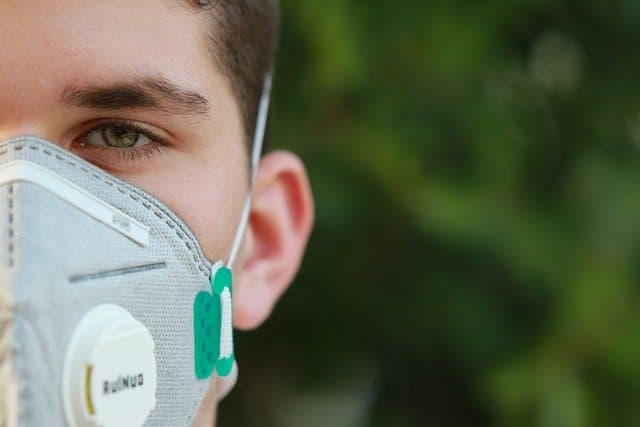
WHO also recommends that you:
[Source]
- Avoid eating raw or undercooked meat or animal organs.
- Avoid contact with live animals and surfaces they may have touched if you’re visiting live markets in areas that have recently had new coronavirus cases.
Follow CDC’s recommendations for using a facemask.
[Source]
- CDC does not recommend that people who are well wear a facemask to protect themselves from respiratory diseases, including COVID-19.
- Facemasks should be used by people who show symptoms of COVID-19 to help prevent the spread of the disease to others. The use of facemasks is also crucial for health workers and people who are taking care of someone in close settings (at home or in a health care facility).
What makes N95 respirators different from facemasks (sometimes called a surgical mask)?
- Infographic: Understanding the difference between surgical masks and N95 respiratorspdf icon
- N95 respirators reduce the wearer’s exposure to airborne particles, from small particle aerosols to large droplets. N95 respirators are tight-fitting respirators that filter out at least 95% of particles in the air, including large and small particles.
- Not everyone is able to wear a respirator due to medical conditions that may be made worse when breathing through a respirator. Before using a respirator or getting fit-tested, workers must have a medical evaluation to make sure that they are able to wear a respirator safely.
- Achieving an adequate seal to the face is essential. United States regulations require that workers undergo an annual fit test and conduct a user seal check each time the respirator is used. Workers must pass a fit test to confirm a proper seal before using a respirator in the workplace.
- When properly fitted and worn, minimal leakage occurs around edges of the respirator when the user inhales. This means almost all of the air is directed through the filter media.
- Unlike NIOSH-approved N95s, facemasks are loose-fitting and provide only barrier protection against droplets, including large respiratory particles. No fit testing or seal check is necessary with facemasks. Most facemasks do not effectively filter small particles from the air and do not prevent leakage around the edge of the mask when the user inhales.
- The role of facemasks is for patient source control, to prevent contamination of the surrounding area when a person coughs or sneezes. Patients with confirmed or suspected COVID-19 should wear a facemask until they are isolated in a hospital or at home. The patient does not need to wear a facemask while isolated.
My employees complain that Surgical N95 respirators are hot and uncomfortable – what can I do?
[Source]
- The requirements for surgical N95 respirators that make them resistant to high velocity streams of body fluids and help protect the sterile field can result in a design that has a higher breathing resistance (makes it more difficult to breath) than a typical N95 respirator. Also, surgical N95 respirators are designed without exhalation valves which are sometimes perceived as warmer inside the mask than typical N95 respirators. If you are receiving complaints, you may consider having employees who are not doing surgery, not working in a sterile field, or not potentially exposed to high velocity streams of body fluids wear a standard N95 with an exhalation valve.
Leave a Reply